
Immigration and Citizenship Law
TURNING 18 DURING THE TURKISH CITIZENSHIP APPLICATION PROCESS (2026 CURRENT LEGAL ANALYSIS)
In this article 12 topics
- What Happens If an Applicant Turns 18 While Their Turkish Citizenship Application Is Pending?
- Legal Basis: Law No. 5901 and the Implementation Regulation
- Is the Application Date or the Decision Date Taken as Basis?
- What Do Council of State Rulings Say About This Dispute?
- What Should a Person Whose File Was Separated Due to Age of Majority Do?
- How Are Administrative Applications and Annulment Lawsuits Evaluated?
- Which Documents Must Be Preserved and Can Be Used in the Lawsuit?
- The Citizenship File and Residence Permit Are Distinct from Each Other
- Major Errors Made in Practice
- Regarding the Court Documents Available on This Page
- Frequently Asked Questions
- Conclusion
Short answer: The fact that a child who is under the age of 18 at the time of filing an application for Turkish citizenship turns 18 while the administrative review is still ongoing does not automatically render the application invalid. Nevertheless, in practice, relying on the rule that citizenship takes effect as of the date of the decision, the administration may sever the child's file from the parents' file or refrain from issuing a favorable decision regarding the child. The primary legal argument that can be asserted against this action is that the child's age and application status must be evaluated based on the application date when the standard petition was entered into the administration's records.
There is an important distinction here: in some rulings of the Council of State on the matter, citizenship was granted to the child under a different legal provision while the lawsuit was pending, and since the dispute became moot, no definitive ruling on the merits was established. Conversely, the opinions of the Council of State public prosecutors in these files stated that the application made before reaching the age of majority must serve as the basis, and that failing to finalize the application solely due to turning 18 during the process lacks compliance with the law. Therefore, neither stating that "the Council of State definitively relied on the application date" nor asserting that "the right inevitably terminates upon turning 18" is legally accurate.
What Happens If an Applicant Turns 18 While Their Turkish Citizenship Application Is Pending?
The dispute generally arises in the following order:
- The parent applies for Turkish citizenship based on investment, a Turquoise Card, or another exceptional ground set forth in Article 12 of Law No. 5901.
- The child, who has not yet reached the age of 18 as of the application date, is also included in the family file.
- While the security and archive investigation as well as the administrative evaluation are ongoing, the child reaches the age of 18.
- A favorable decision is rendered regarding the parents; however, the name of the now-adult child is not included in the decision, or the child's file is severed.
- The child is asked to make an independent application, or it is not clearly communicated how the pending file has been concluded.
Although this situation is particularly observed in Turkish citizenship by investment files, not every type of citizenship is subject to the same rules. For instance, pursuant to Article 11 of Law No. 5901, an applicant applying through the general naturalization pathway must already be of legal age and have the capacity to act. The discussion here pertains not to an adult who is an independent applicant, but to an individual who was processed as a minor child within the parent's file.
The current stage of the application file is also critical. System registration of the exceptional application, archive research, Ministry evaluation, and decision stages are distinct from one another. For the general workflow of the process, legal process following exceptional citizenship application titled article and citizenship statements of the Directorate General of Population and Citizenship Affairs may be examined.
Legal Basis: Law No. 5901 and the Implementation Regulation
When addressing the dispute over reaching the age of 18 at the time of application, looking at a single provision is not sufficient. Turkish Citizenship Law No. 5901, Regulation on the Implementation of the Turkish Citizenship Law and constitutional principles must be evaluated together.
Article 10 of Law No. 5901: Does Meeting the Requirements Grant an Absolute Right?
Pursuant to Article 10 of the Law, meeting the requirements sought for citizenship does not grant an individual an absolute right to naturalization. The administration has a sphere of evaluation and discretion. However, the existence of discretionary power does not mean that the administration may establish different criteria without a legal basis, conclude similar files with different outcomes without justification, or exempt its acts from judicial review.
Therefore, in the specific dispute, two questions must be answered separately: According to which provision was the child included in the parent's file? What is the concrete and explicit legal reason for the administration's act of severing the child from the file or excluding them from the scope of a positive decision?
Article 12 of Law No. 5901: Minor or Dependent Child
In certain exceptional citizenship applications within the scope of subparagraph (b) of the first paragraph of Article 12 of the Law, the applicant's foreign spouse, as well as their own and the spouse's minor or dependent foreign child may also fall within the scope of the regulation. The proper registration of the child in the family file as of the application date constitutes the starting point for the age debate.
The concept of "dependent child" and the concept of "minor child" are not the same. Even if an individual has reached the age of 18, they may claim to be evaluated under the status of a dependent child due to reasons such as health conditions or the need for continuous care. However, this status is not automatically accepted; it must be proven with concrete and up-to-date documents.
Article 20 of Law No. 5901: When Does the Decision Take Effect?
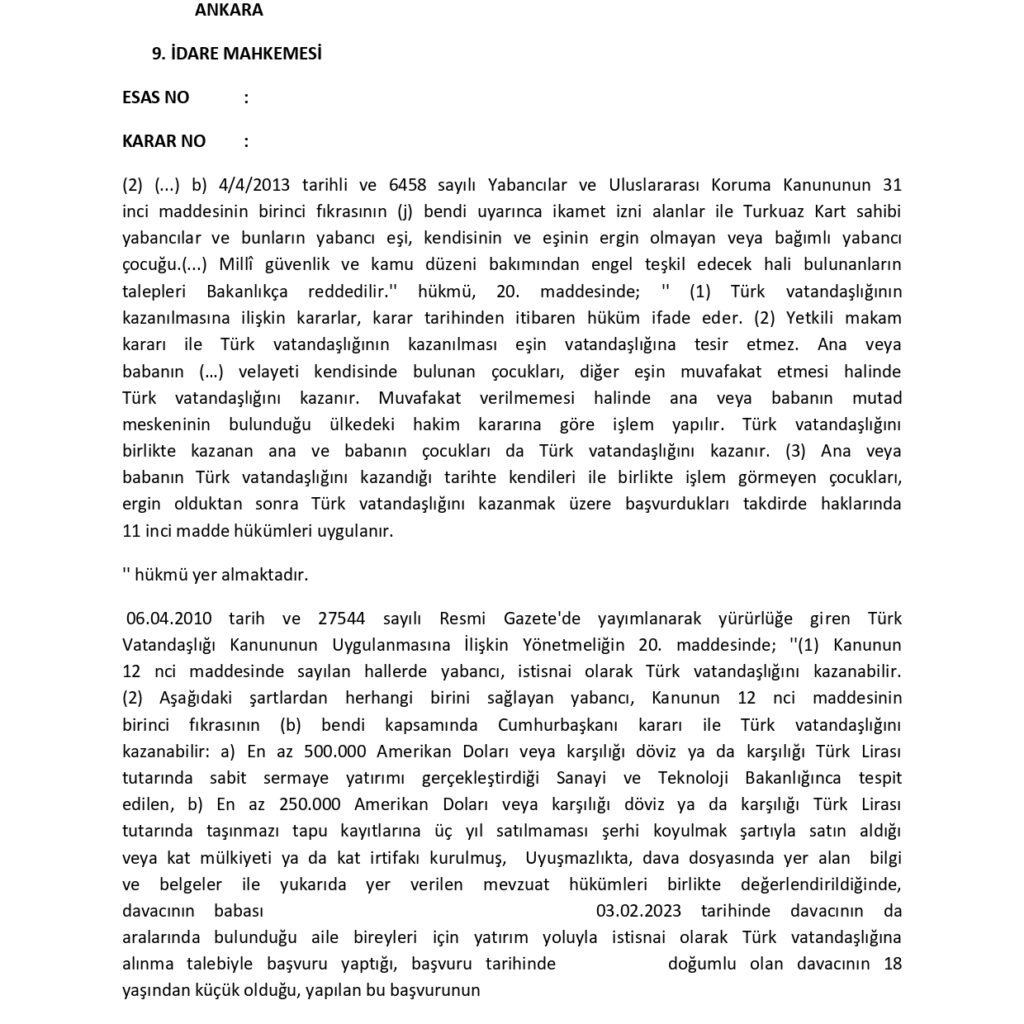
Article 20 of the Law stipulates that decisions regarding the acquisition of Turkish citizenship through the competent authority's decision shall as of the decision date, take effect. The same article regulates the status of children whose custody is held by one parent and who acquire citizenship with the consent of the other spouse, as well as the joint acquisition of citizenship by both mother and father.
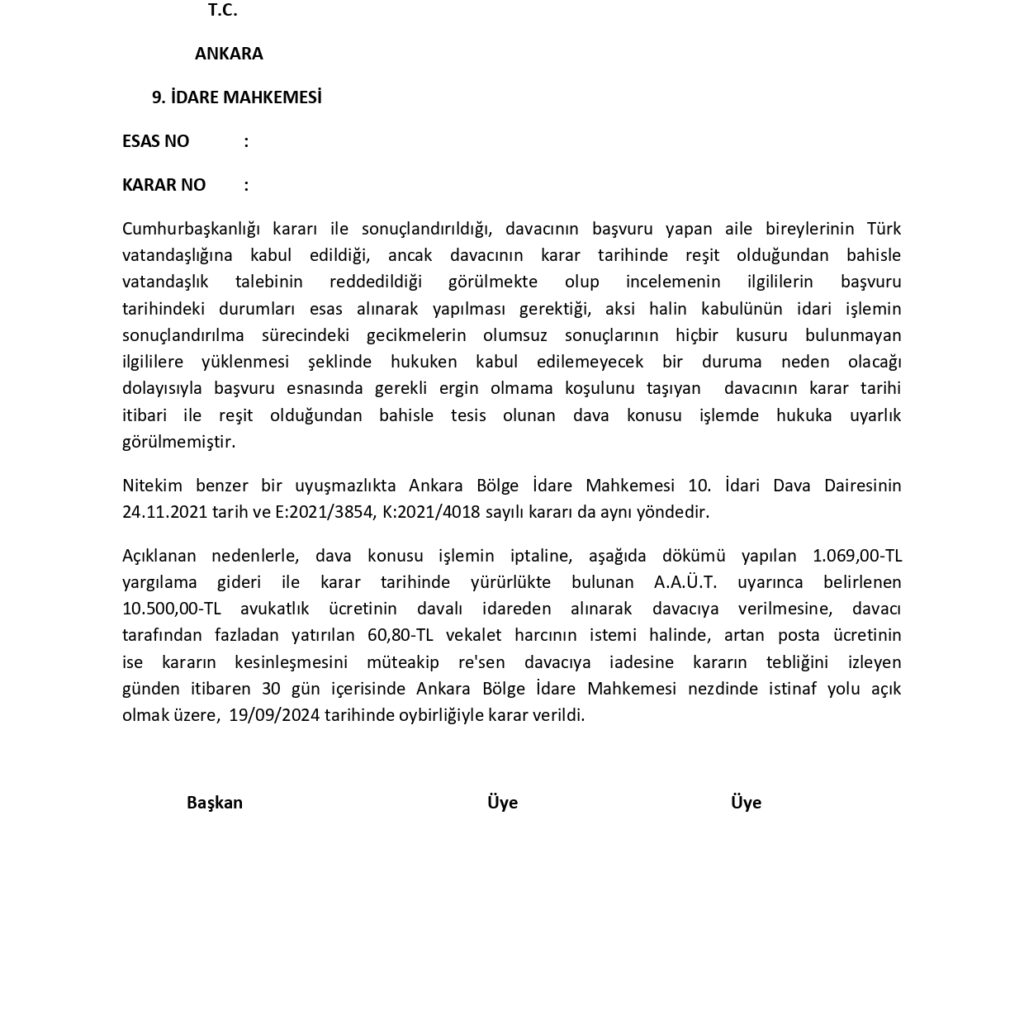
The administration's practical approach is that an individual who reaches the age of majority on the decision date can no longer be processed as a child dependent on the parents. The counter-argument to this is that the rule in Article 20 determines the date from which citizenship takes effect, but does not solely resolve the question of which date the application conditions are fixed.
Article 64/6 of the Regulation: How is the Application Date Determined?
Pursuant to the sixth paragraph of Article 64 of the Implementation Regulation, the application date in citizenship proceedings is the date on which the applicant's petition is registered in the records by the receiving authority. This provision is clear regarding the determination of when the application was made.
However, provision 64/6 does not contain an explicit sentence stating that "the age of the child is fixed as of the application date in all cases." Therefore, while this provision serves as a strong legal basis, it must be asserted together with Articles 12 and 20 of the Law, the manner in which the applicant was included in the file, the administrative rationale for the action, and the principles of legal certainty and the protection of family unity.
Articles 41 and 66 of the Constitution
The principles regarding the rule of law and judicial review enshrined in the Constitution of the Republic of Turkey Article 66 regulates that citizenship shall be acquired under the conditions prescribed by law. Article 41 establishes the constitutional framework regarding the protection of the family. The principle of family unity is not an independent ground for acquisition that mandates the granting of citizenship on its own; however, it is an important principle to be taken into account in the interpretation of statutory provisions and the review of the proportionality of administrative acts.
Is the Application Date or the Decision Date Taken as Basis?
There is no specific provision in the legislation that eliminates all ambiguities by stating that "if a person who is a child at the time of application turns 18 during the process, the following definitive result shall ensue." The dispute arises from the interpretation of different provisions.
Scroll horizontally to view the full table
| Subject Matter Reviewed | The administration's decision-date approach | Legal argument in favor of the application date |
|---|---|---|
| Age of the child | Whether the individual has reached the age of majority when the citizenship decision is rendered is taken into consideration. | The application was filed before the child reached the age of 18, and the child was included in the family file. |
| Legal basis | Article 20 of Law No. 5901: The decision takes effect as of the date of the decision. | Article 64/6 of the Regulation: The application date is the date on which the petition form is officially recorded in the registry. |
| Consequence of the delay | The file of an individual who has reached the age of majority on the date of the decision may be severed. | The period of administrative review, which is beyond the applicant's control, must not adversely alter the initial status. |
| Family aspect | An adult individual is no longer a child under parental authority. | The exclusion of a child—who was included in the family file as of the application date—solely due to administrative delay must be examined in terms of family unity and legal certainty. |
The argument that can be raised in favor of the application date is not the assertion that the child automatically became a Turkish citizen. The more proportionate legal argument is as follows: If the administration excludes an individual, who was admitted to the file as a child on the application date, solely on the grounds that they turned 18 during its review period, it must justify this choice with a clear statutory basis and verifiable reasoning.
On the other hand, pursuant to Article 10 of Law No. 5901, fulfilling the age requirement as of the application date alone does not mean that citizenship will necessarily be granted. National security and public order assessments, as well as other conditions specific to the type of citizenship upon which the application is based, are evaluated separately.
What Do Council of State Rulings Say About This Dispute?
Multiple files concerning individuals who were under the age of 18 on the application date but reached the age of majority by the decision date have been brought before the 10th Chamber of the Council of State (Danıştay). The full citation of the decisions Danıştay Case Search can be searched on the screen using the merit and decision numbers.
Scroll horizontally to view the full table
| Ruling | Core dispute | Developments during the proceedings | Outcome of the Chamber |
|---|---|---|---|
| Council of State 10th Chamber, E.2019/10085, K.2024/1953, 15.05.2024 | The twin children, who were minors at the application date, not being included in the scope of the favorable decision due to reaching the age of majority by the decision date | The children were subsequently granted citizenship pursuant to Article 12/1-c of Law No. 5901. | It was decided that there was no need to render a judgment as the case had become moot. |
| Council of State 10th Chamber, E.2019/12203, K.2023/6981, 16.11.2023 | Denial of citizenship to a person included in a family application because they reached the age of majority by the decision date | The plaintiff was granted citizenship by another Presidential Decree while the lawsuit was pending. | No judgment on the merits was rendered as the subject matter of the dispute ceased to exist. |
| Council of State 10th Chamber, E.2019/9644, K.2023/7966, 06.12.2023 | Exclusion of a child from the family application upon turning 18 after the application date | During the proceedings, the plaintiff was granted citizenship within the scope of Article 12/1-c. | It was decided that there was no need to render a judgment on the case, which had become moot. |
The Significance of Case File No. E.2019/10085
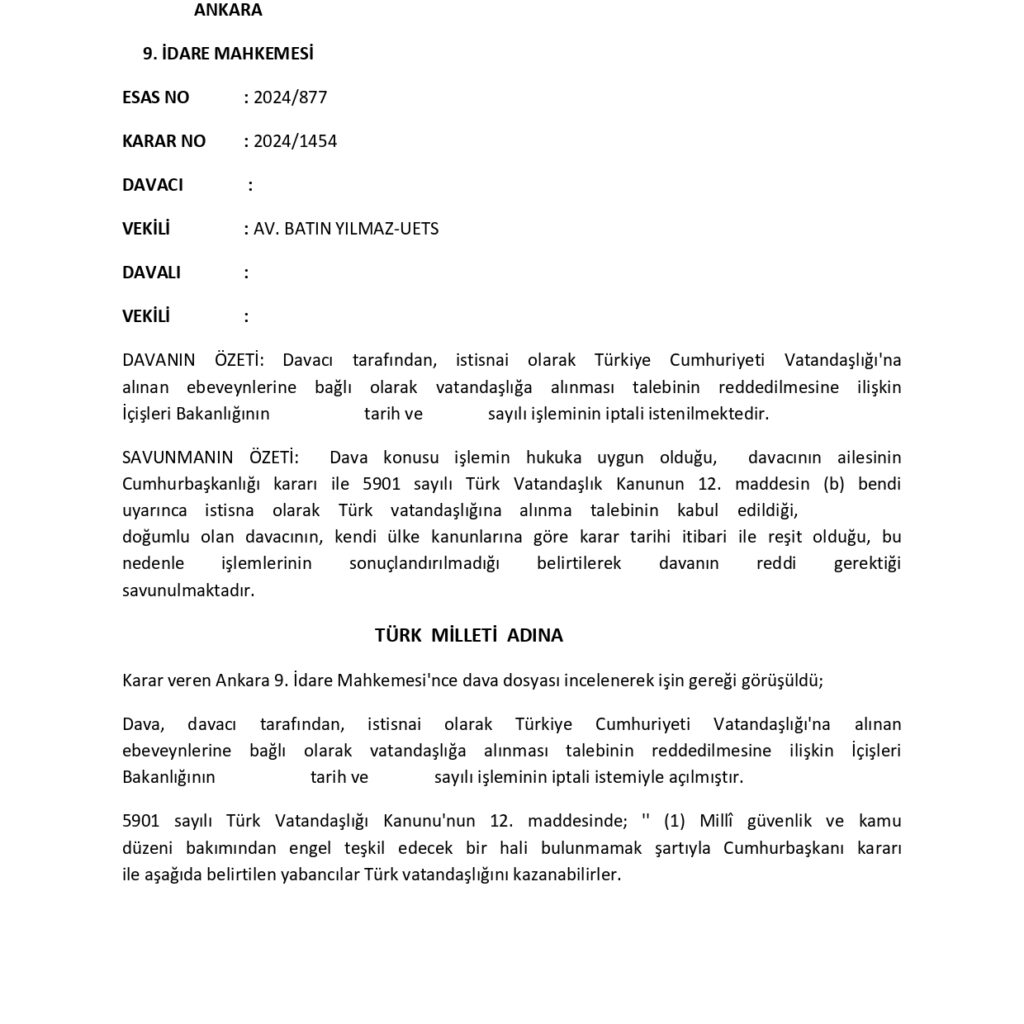
In this case file, a Yemeni national father filed an application for exceptional citizenship on March 4, 2019, for his spouse and children. The twin children, born on April 23, 2001, were under the age of 18 as of the application date. However, when Presidential Decree No. 1093 dated May 9, 2019, was issued, the children had reached the age of 18, and therefore their names were not included in the affirmative decision.
The defendant administrations argued that the decision date is taken into account in the acquisition of citizenship and that the children had attained the age of majority by the decision date. The Council of State prosecutor, evaluating the provisions of Law No. 5901 and the Regulation together, opined that submitting the application before reaching the age of majority is sufficient for children to acquire citizenship derivatively through their mother and father.
While the proceedings were ongoing, the children were granted Turkish citizenship pursuant to Article 12/1-c of Law No. 5901 by Presidential Decree No. 6025 dated September 13, 2022. Consequently, the 10th Chamber of the Council of State did not render a judgment on the merits, as the dispute had become moot. It is significant that the litigation expenses and attorney's fees were left upon the defendant administrations; however, this outcome does not imply that the Chamber established a binding ruling on the merits to the effect that 'the application date is definitively taken as the basis.'
Why Should the Opinion of the Council of State Prosecutor and the Chamber Decision Be Written Separately?
The opinion of the Council of State prosecutor may serve as a strong assessment of the legal issue in the case file; however, it is not the judgment of the panel of judges rendering the decision. Similarly, the opinion of the reporting judge cannot be equated with the ruling of the Chamber. In these cases, the Chamber did not address the merits of the dispute due to the subsequent acquisition of citizenship by the individuals.
This distinction is of great value in practice. In the petition, the prosecutor's opinion can be used to support the thesis based on the application date; however, it would not be accurate to present it in the form of 'the Council of State has established a definitive precedent on this matter.' In each new file, the transaction date, the child's date of birth, the application form, family ties, the administration's justification, and subsequent procedures are evaluated separately.
Is a Decision of No Grounds for Adjudication Considered Winning the Lawsuit?
No. A 'decision of no grounds for adjudication' indicates that the dispute has ceased to exist during the course of the proceedings. The court or the Council of State no longer deems it necessary to examine the merits of the contested administrative act. Although the plaintiff's subsequent naturalization produces a de facto favorable outcome, this procedural decision is not a ruling on the merits establishing that the initial act subject to the lawsuit was unlawful.
Similarly, ordering the administration to pay the litigation expenses may be significant in terms of determining who caused the lawsuit; however, it does not, by itself, prove that the administrative act was unlawful in all its elements.
What Should a Person Whose File Was Separated Due to Age of Majority Do?
The first step to be taken is not immediately filing a new citizenship application. First, it must be determined which administrative act was established in the current family file and when this act was learned. This is because a new application does not automatically suspend the limitation period for filing a lawsuit regarding the previous act and may not be sufficient on its own to preserve the claims arising from the prior application.
1. Document the Application Date and the Inclusion of the Child in the File
The registration date of the formal petition, the application number, the family roster, the birth certificate, the passport, and, if applicable, the application receipt must be compiled. The status message on the online inquiry screen alone may not always be sufficient to prove the application date and the scope of the file.
2. Examine the Decision Regarding the Parent and the Status of the Child Separately
It must be verified whether the child's name is included in the approval or announcement document demonstrating that the parent has been granted citizenship. Regarding the nature of such a document, citizenship decision approval notification document detailed information can be found in our article.
The absence of the child's name on the list does not always independently indicate whether the file has been rejected, severed, or is still under review. Requesting written and explicit information from the administration is important for determining the definitive and executory act that may be subject to litigation.
3. Record the Dates of Notification and Discovery
The date on which the citizenship decision, rejection letter, or notice of file separation was served must be preserved. Even in the absence of formal service, the date on which the administrative act was discovered through other means may become critical in disputes concerning litigation deadlines. Therefore, emails, e-Devlet screens, administrative correspondence, petition responses, and delivery records should be retained.
4. Do Not Select a Court Without Determining the Type of Administrative Act
The subject matter of the lawsuit may be the omission of an individual's name directly from a Presidential decree. In another case, there may be a distinct explicit rejection or file closure action separately issued by a Ministry, governorship, or civil registry office. The competent and authorized judicial forum varies depending on the authority that issued the act and the legal nature of the act.
How Are Administrative Applications and Annulment Lawsuits Evaluated?
Administrative Application Within the Scope of Article 11 of İYUK
Pursuant to the provisions of the Administrative Procedure Law No. 2577 Article 11 grants interested parties the opportunity to apply to the superior authority—or to the authority that issued the act if no superior authority exists—to request the revocation, withdrawal, amendment, or replacement of the administrative act prior to filing an administrative lawsuit. An application submitted within due time and to the correct authority may produce the statutory effect on the limitation period for filing a lawsuit. If no response is provided within thirty days, the request is deemed rejected.
However, not every petition qualifies as an application under Article 11 of İYUK, and not every application suspends the limitation period for filing a lawsuit. The content of the petition, the authority to which it was submitted, the date of application, and the disputed administrative act must be examined collectively. It should not be assumed that a request for information or file status inquiry will suspend the litigation period.
Statute of Limitations / Filing Period
Unless a different period is prescribed by a special law, the general period for filing an action for annulment in administrative courts and the Council of State is 60 days. The starting date of this period is determined based on whether the act was served, when and how the individual learned of the act, prior administrative applications, and the nature of the act subject to the lawsuit.
Therefore, a general calculation such as "60 days in any case from the parents' citizenship decision" or "the period begins on the day the child turns 18" is incorrect. Exceeding the limitation period may cause the court to dismiss the lawsuit without examining the merits of the dispute. For rejection procedures and limitation periods in citizenship applications, rejection of citizenship application and annulment action you may also consult our guide.
Competent and Authorized Court
Actions for annulment filed directly against Presidential decrees Article 24 of the Council of State Law No. 2575 may fall under the jurisdiction of the Council of State as a court of first instance pursuant to. Conversely, the competent and authorized court against the definitive act of a Ministry, governorship, or another administrative authority may not be the same. Rather than a blanket assumption that "citizenship lawsuits are always filed in the Ankara Administrative Court," the authority that issued the contested act and its legal nature must be determined.
Does the Court Directly Grant Citizenship?
In an annulment lawsuit, the court cannot substitute itself for the administration and directly grant Turkish citizenship to an individual. The judicial authority reviews the subject administrative act in terms of authority, form, reason, subject matter, and objective. If the act is annulled, the administration is obligated to issue a new act in accordance with the reasoning of the court decision.
It is possible for the administration to grant citizenship to the individual based on another legal ground while the lawsuit is pending; this has occurred in the Council of State (Danıştay) files examined. However, there is no rule or guarantee that this will happen in every case.
Can a Stay of Execution Be Requested?
A stay of execution may be requested along with the annulment lawsuit. For this, the conditions of the implementation of the administrative act causing damages that are difficult or impossible to compensate and the act being clearly unlawful must be met together. The acceptance of the request is not automatic. Concrete impacts on education, residence, family unity, or travel must be explained with documentation. Regarding the general structure of administrative jurisdiction administrative law and administrative litigation additional information is available on our page.
Which Documents Must Be Preserved and Can Be Used in the Lawsuit?
In age and application date disputes, rather than abstract narratives, documents showing the chronological order of events are decisive. The file must specifically include the following records:
- Citizenship application form and the document registration date of the form,
- Application number and dated screenshots of online query screens,
- The child's birth certificate, passport, and duly certified translations,
- List or delivery receipt showing that the child has been included in the family file,
- Citizenship approval/notification document of the parents and, if applicable, the Presidential decree,
- An administrative official letter indicating that the child's name is not on the list or that the case file has been severed,
- A notification regarding the rejection, case file closure, or separate evaluation procedure,
- Petitions submitted to the Civil Registry Office and the Directorate General of Civil Registration and Nationality, along with their responses,
- An e-mail, e-Government record, or delivery receipt showing the date of service and awareness,
- In case of an allegation of a dependent child, medical reports, and documents demonstrating the need for care and economic dependency,
- Current records demonstrating the impacts on residence, education, and family unity.
The documents must not only be present but also submitted in a consistent chronology with one another. The application date, the 18th birthday, the date of the decision regarding the parent, subsequent proceedings concerning the child, and service dates can be shown on a separate timeline.
The Citizenship File and Residence Permit Are Distinct from Each Other
The continuation of a citizenship application does not automatically grant the foreigner the right to reside in Turkey indefinitely. The type and validity date of the child's current residence permit must also be checked. Although reaching the age of 18 is significant in terms of a family residence permit, each individual's situation may vary depending on education, prior residence duration, and other permit types for which they may apply.
According to the residence permit statements of the Presidency of Migration Management, a family residence permit grants the child the right to education in primary and secondary education institutions until the age of 18 without needing to obtain a separate student residence permit. To maintain the legal stay of the person who has reached the age of majority, the appropriate permit type must be evaluated in a timely manner. The legal framework of residence types is governed by the Law on Foreigners and International Protection No. 6458. Regarding the subject, family residence permit, student residence permit and residence permit transition application our guides can be reviewed.
Pursuing an administrative application or lawsuit for a citizenship dispute does not automatically extend the residence permit duration. These two processes must be tracked in parallel and independently of each other.
Major Errors Made in Practice
- Assuming an automatic rejection if the child's name is not on the approval document: First, the definitive administrative act and its justification must be determined in writing.
- Merely filing a new application: A new file does not automatically preserve the statutory limitation period for filing a lawsuit against the previous administrative act.
- Assuming that every petition suspends the litigation period: Correspondence that does not meet the conditions set forth in Article 11 of the Administrative Litigation Procedure Law (İYUK) may not have a tolling effect on the statutory periods.
- Litigating the wrong administrative act: A Presidential decree, a Ministry action, and a governorship written notice do not share the same legal nature.
- Presenting the opinion of the Council of State prosecutor as a Chamber decision: The distinction between an opinion and a ruling must strictly be maintained.
- Mistaking a decision of dismissal for lack of subject matter (konusuzluk) for a decision of annulment on the merits: In cases terminated by the subsequent grant of citizenship, the lawfulness of the initial administrative act may not have been conclusively adjudicated.
- Neglecting residence status: Legal residency requirements must be continuously met while the citizenship application file is pending.
Regarding the Court Documents Available on This Page
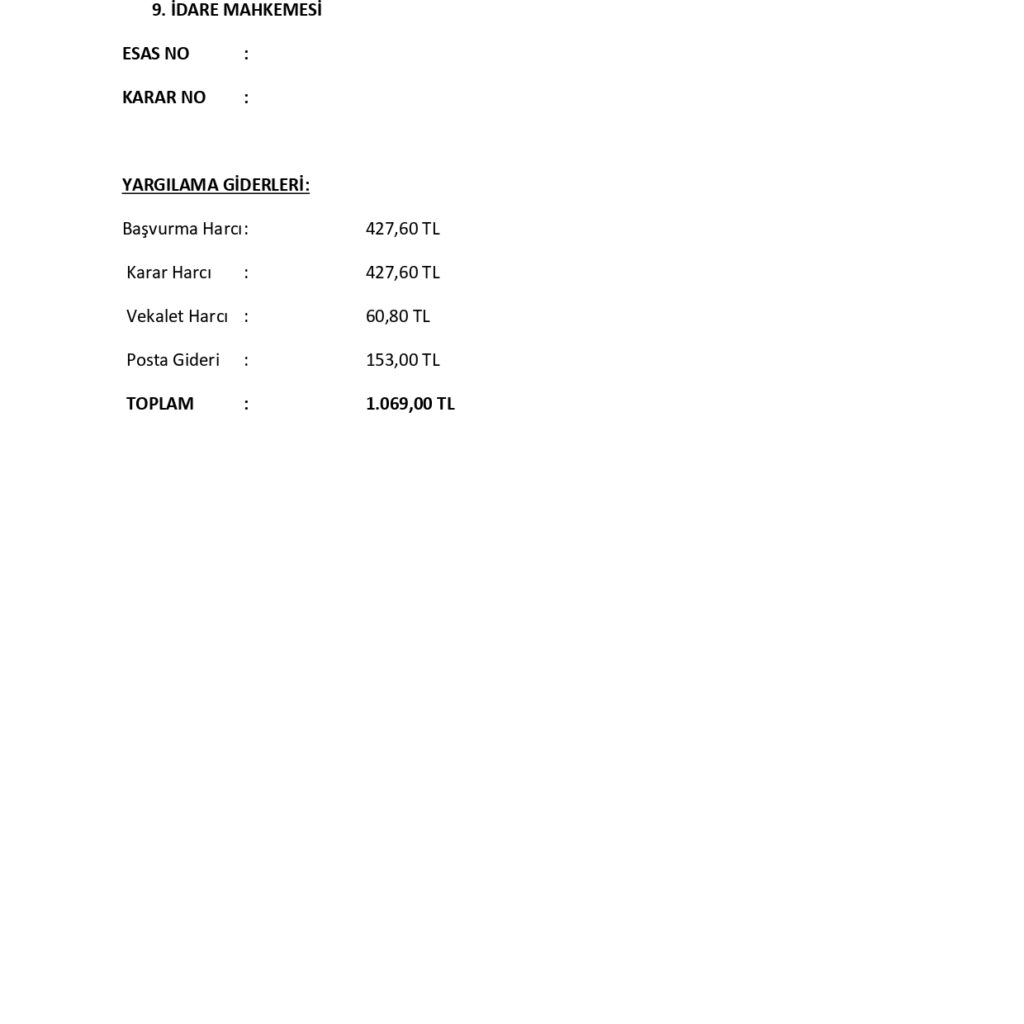
The anonymized documents below are examples from an administrative lawsuit filed by our firm concerning the citizenship file of an individual who reached the age of majority during the application process. These documents are shared not as a guarantee of success or outcome indicating that the same result will be obtained in every dispute, but rather to illustrate the factual events and legal issues that may be brought before the judiciary in such cases.
Frequently Asked Questions
Does a child who turns 18 during the citizenship application process lose their rights?
It cannot be said that the application is automatically void. The administration may sever the file based on the date of the decision; against this, it can be argued that the child was a minor at the time of application, was duly included in the family file, and that administrative delay should not prejudice the applicant. The outcome is evaluated based on the type of application and the specific transaction.
According to which date is age calculated in a citizenship application?
Article 64/6 of the Regulation defines the application date as the date on which the petition is officially recorded by the receiving authority. However, the administration may adopt a different practice on the grounds that citizenship takes effect from the decision date and that the individual must have attained the age of majority by that date. Therefore, this issue has been a subject of dispute in practice.
Must a separate application be initiated for an individual who reaches the age of 18?
In practice, severing the file is possible; however, it cannot be said that this is legally mandatory and unquestionable in every case. Without examining the registration date of the current application, the legal provision under which the child was included in the file, and the written justification of the administration, it should not be concluded that a new application is the sole option.
What should be done if the parents have acquired citizenship, but the child's name is not included in the decision?
First, the parent's decision document, the child's application registration, and the notification date must be obtained. It should be inquired in writing from the administration whether the child's file has been rejected, severed, or is still under review; if there is a risk regarding the statute of limitations for filing a lawsuit, a legal assessment must be made without delay.
Does submitting a petition to the administration suspend the litigation period?
Every petition does not suspend the statutory period. An application that complies with Article 11 of the İYUK (Administrative Procedure Law), is filed within the statutory period, and is directed to the correct authority may produce the effect prescribed by law. It should not be assumed that an application for information or file inquiry will suspend the statutory period.
What is the statute of limitations for filing a lawsuit?
If there is no specific period, the general limitation period is 60 days. However, the starting date may vary depending on the service or discovery of the administrative act, whether an administrative application was filed, and the nature of the act subject to the lawsuit. Therefore, the limitation period must be calculated based on the specific case file.
Should the lawsuit be filed in the Council of State (Danıştay) or the administrative court?
In certain lawsuits to be filed directly against a Presidential decree, the Council of State (Danıştay) has jurisdiction as a court of first instance. However, against the definitive act of a ministry, governorate, or another authority, the competent and authorized court may differ. The court should not be selected before determining the administrative act sought to be annulled.
Can the court directly grant Turkish citizenship to the individual?
No. The administrative judiciary does not step into the shoes of the administration to render a citizenship decision. It annuls the administrative act found to be unlawful, and the administration issues a new act in accordance with the reasoning of the court judgment.
Has the Council of State (Danıştay) rendered a definitive precedent on this matter?
In the examined files numbered E.2019/10085, E.2019/12203, and E.2019/9644, the plaintiffs were granted citizenship during the proceedings, and therefore the lawsuits became moot. While there are significant opinions of the public prosecutor based on the application date, the Chamber did not issue a definitive annulment judgment on the merits of the dispute in these files.
Is a residence permit required while the citizenship lawsuit is pending?
Yes. A citizenship application or a lawsuit concerning citizenship does not, by itself, confer the right to legal stay or automatically extend the existing residence permit. The appropriate residence permit type and transition period must be tracked separately.
Conclusion
Reaching the age of 18 during a Turkish citizenship application creates a significant discrepancy between the application date and the decision date, particularly in exceptional citizenship files dependent on parents. While the Regulation clearly defines the application date, the administration may sever the individual from the family file based on the decision date rule set forth in Article 20 of the Law.
Files brought before the Council of State demonstrate that this issue is not merely theoretical. Nevertheless, lawsuits that become moot due to the subsequent grant of citizenship should not be presented as definitive annulment judgments on the merits. Although the public prosecutor's opinions based on the application date provide a strong legal argument, the documentation, grounds for the act, date of service, and competent court of each file must be determined individually.
When faced with a similar situation, the application document, records showing that the child was included in the file, the decision regarding the parent, and the written procedure concerning the child must be obtained without delay. For general information on the subject, immigration and citizenship law page and contact information may be examined.
Author: Atty. Batın YILMAZ – Istanbul Bar Association Registry: 77008
Last updated: October 3, 2026
Legal information: This content has been prepared for general legal information purposes. The outcome of a specific case may vary depending on the type of application, date of transaction, service of process, documents in the file, and current legislation. The content does not guarantee any work or outcome; it has been prepared in compliance with the prohibition of attorney advertising and professional rules.

Author
Atty. Batın Yılmaz
Founding attorney of Batın Yılmaz Law Firm. He provides litigation and legal consultancy services in criminal law, corporate law, administrative law, real estate law, enforcement and bankruptcy law, and compensation law, as well as immigration and citizenship law.
About our firm