
Immigration and Citizenship Law
What is a Restriction Code? How to Remove a Restriction Code? (2026 Updated)
frequently encountered at Turkey's border gates and in administrative proceedings regarding foreigners restriction codes, are administrative records that restrict a foreign national's entry, stay, or departure from the country. Although the restriction code application is theoretically intended to ensure public order and public security,there are numerous examples where it is applied arbitrarily and unlawfully by the Provincial Directorate of Migration Management and the Police in practice.
The purpose of this article is to: what is a restriction code, why it is applied, how to learn a restriction code, how to remove a restriction code, what are the methods of appeal, how the court process works is to explain the most frequently asked topics in detail and provide genuine legal benefit to individuals.
What is a Restriction Code?
Restriction code, refers to an administrative record that restricts a foreign national's entry into or stay in Turkey. Restriction codes;
- Provincial Directorate of Migration Management,
- Directorate General of Security,
- Gendarmerie,
- Coast Guard,
- In certain cases, Ministry units
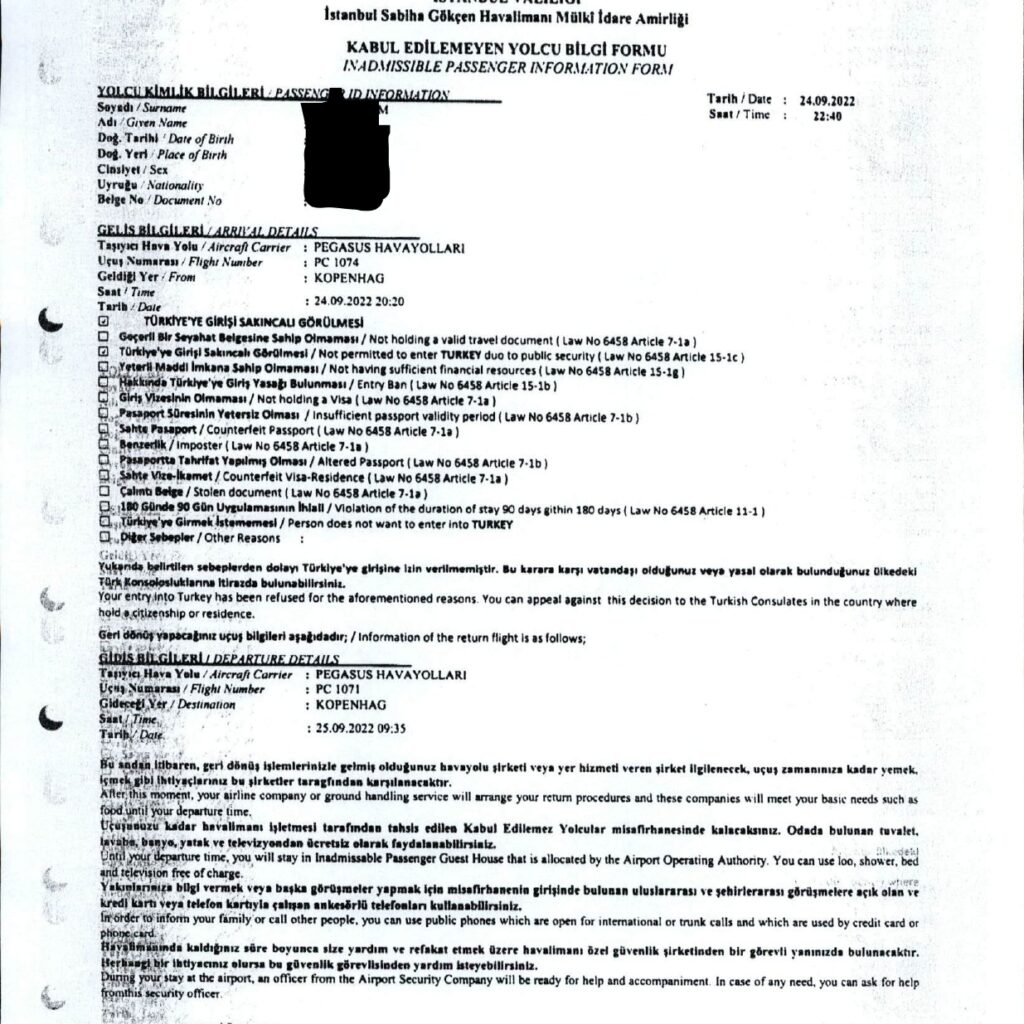
can be imposed by. Generally, restriction codes are applied to foreign nationals at the airport upon their arrival when they are denied entry. The concerned person is sent back to the country they came from on the same flight by issuing an INADMISSIBLE PASSENGER FORM (INAD PASSENGER INFORMATION FORM).
WHAT IS AN INAD PASSENGER FORM / INADMISSIBLE PASSENGER INFORMATION FORM?
The Inadmissible Passenger Information Form / Refused Passenger Information Form is a document served by the Provincial Directorate of Migration Management Airport Personnel to foreign nationals arriving in Turkey from abroad who are denied entry for any reason, stating the grounds for the refusal of entry. A copy of the relevant document is shared below in our article.
The general purposes of restriction codes are:
- To ensure public order and security
- To prevent the re-entry of deported foreigners
- To keep visas or residence permits under control
- To monitor irregularities
However, however, in practice, these purposes are frequently deviated from and many individuals due to incorrect, erroneous, or unjustified restriction codes are aggrieved.https://batinyilmaz.av.tr/tahdit-kodu-nedir-nasil-kaldirilir/ In our article, what restriction codes are and their meanings are clearly stated. This article will explain how restriction codes can be removed and the litigation process.
HOW IS THE ENTRY BAN LIFTED?
First and foremost, it should be noted that;
It is not required for a person subjected to a restriction code to have previously been in Turkey or involved in a judicial incident in Turkey. It is frequently observed that entry bans are imposed by applying restriction codes and citing public order grounds even for individuals who have never visited Turkey. Regarding the removal of the restriction code, a lawsuit must filed before the administrative courts within 60 days from the date of notification of the decision. We must emphasize here that; the competent court where the lawsuit will be filed must be correctly determined.
To give an example; in a lawsuit to be filed regarding the application of a restriction code to a foreign national arriving at Istanbul Airport, Istanbul Administrative Courts are not competent in every case. The competent court for lawsuits regarding restriction codes issued by the General Directorate of Combating Irregular Migration is the Ankara Administrative Courts. If a lawsuit is filed in the Istanbul Administrative Courts on the grounds that the decision was made in Istanbul, the Istanbul Administrative Courts will issue a decision of lack of jurisdiction and forward the file to the Ankara Administrative Courts.
CAN A STAY OF EXECUTION BE REQUESTED IN LAWSUITS FOR THE REMOVAL OF RESTRICTION CODES?
It is observed that a stay of execution is requested in the petitions of administrative lawsuits to be filed for the annulment of restriction codes or entry ban decisions. Although a stay of execution can technically be requested since the lawsuit is an administrative action, such a request only prolongs the process in lawsuits concerning entry bans and restriction codes.
Requests for a stay of execution in lawsuits filed for the removal of entry bans and restriction codes are met with negative rulings by the Administrative Courts. Therefore, since requesting a stay of execution will prolong the litigation process, omitting such requests entirely, or waiving them if already made, will be in the best interest of the applicant.
PRECEDENT DECISION ON THE REMOVAL OF ENTRY BAN
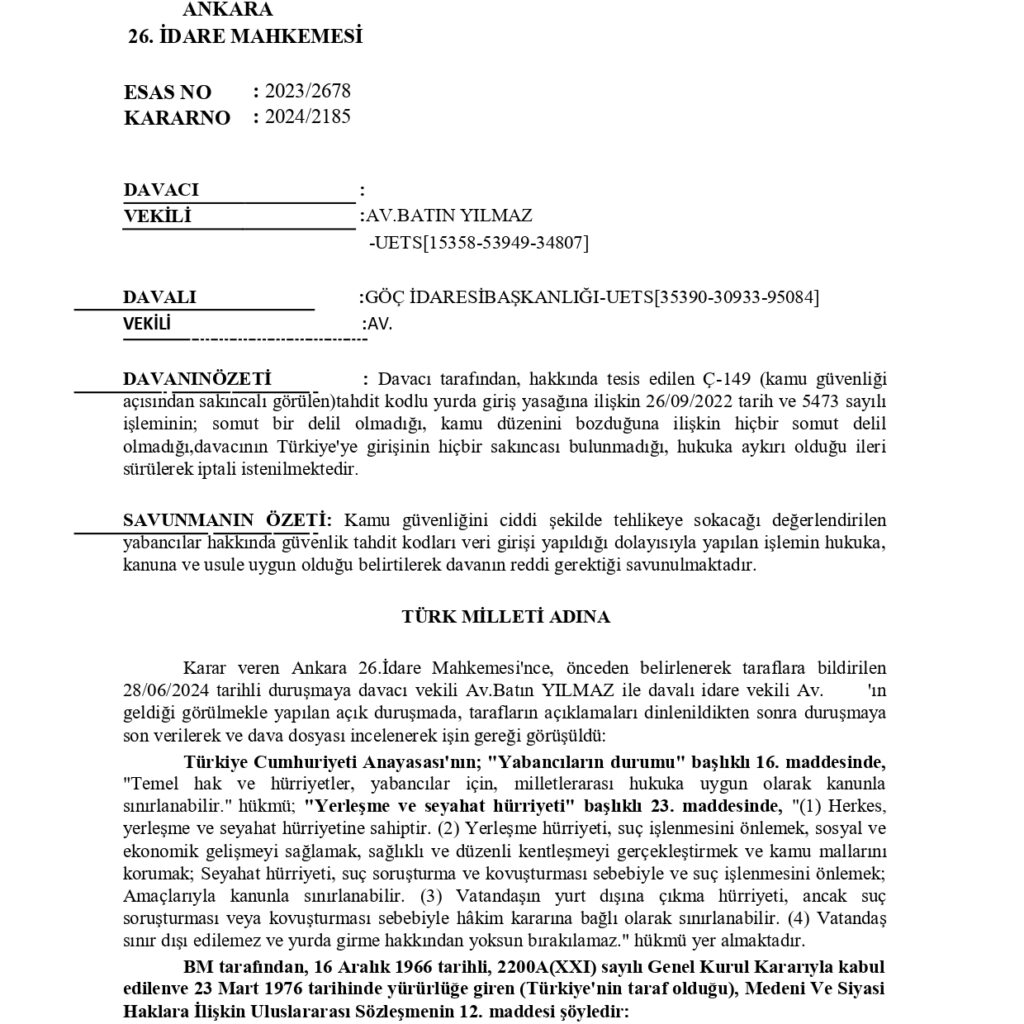
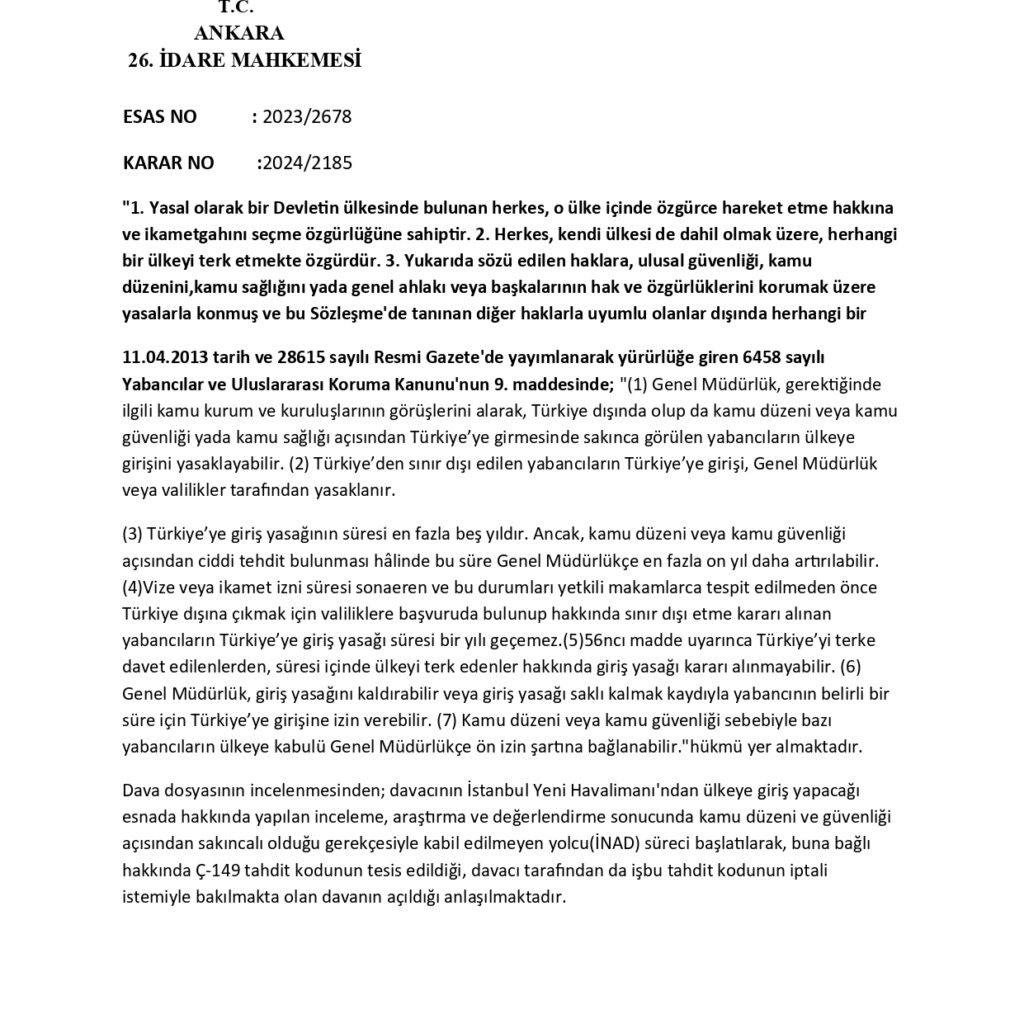
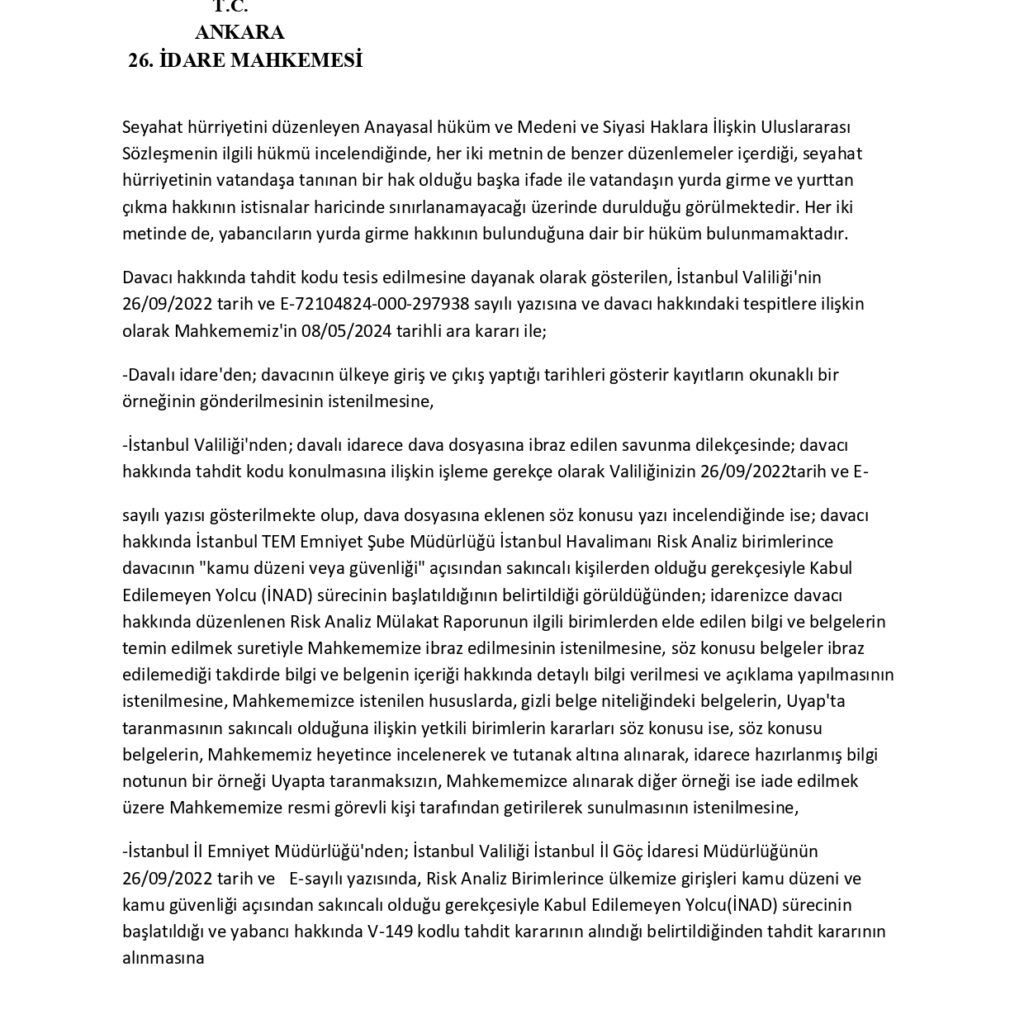
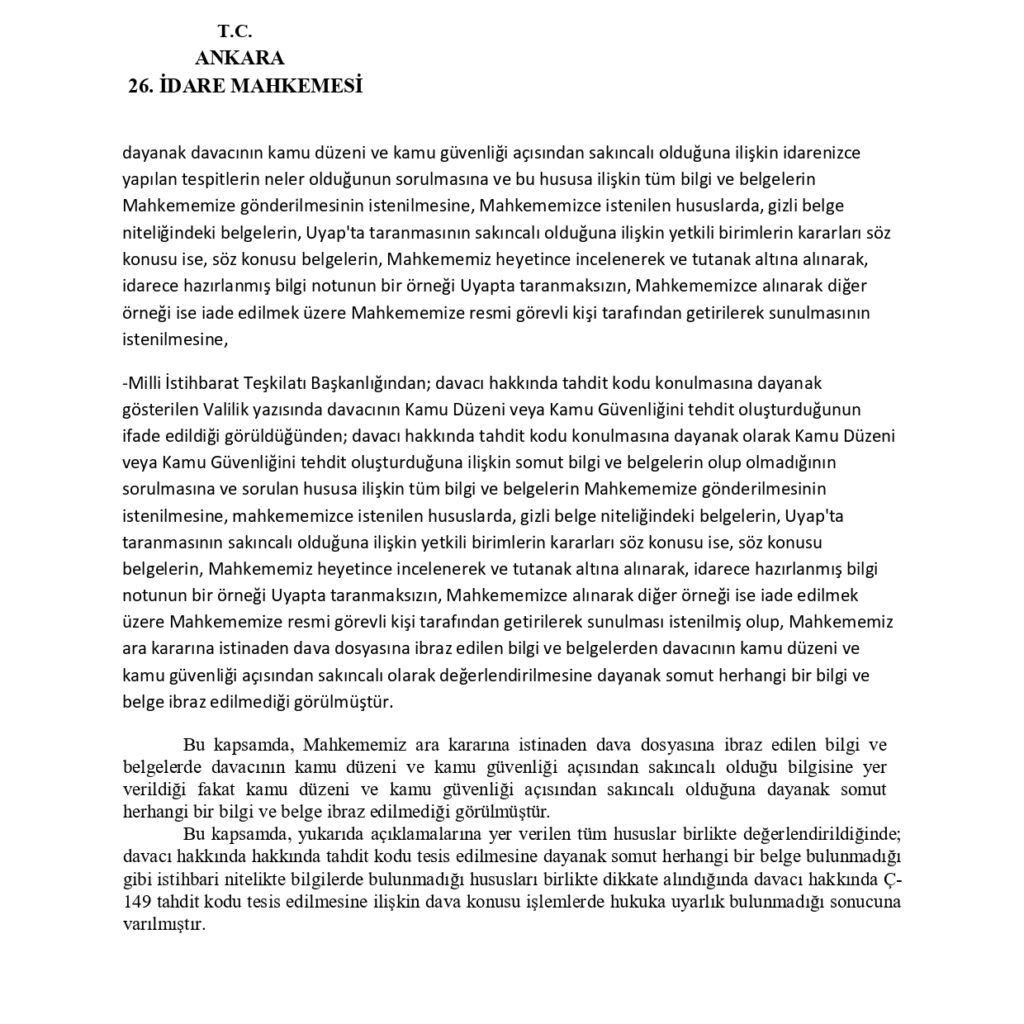
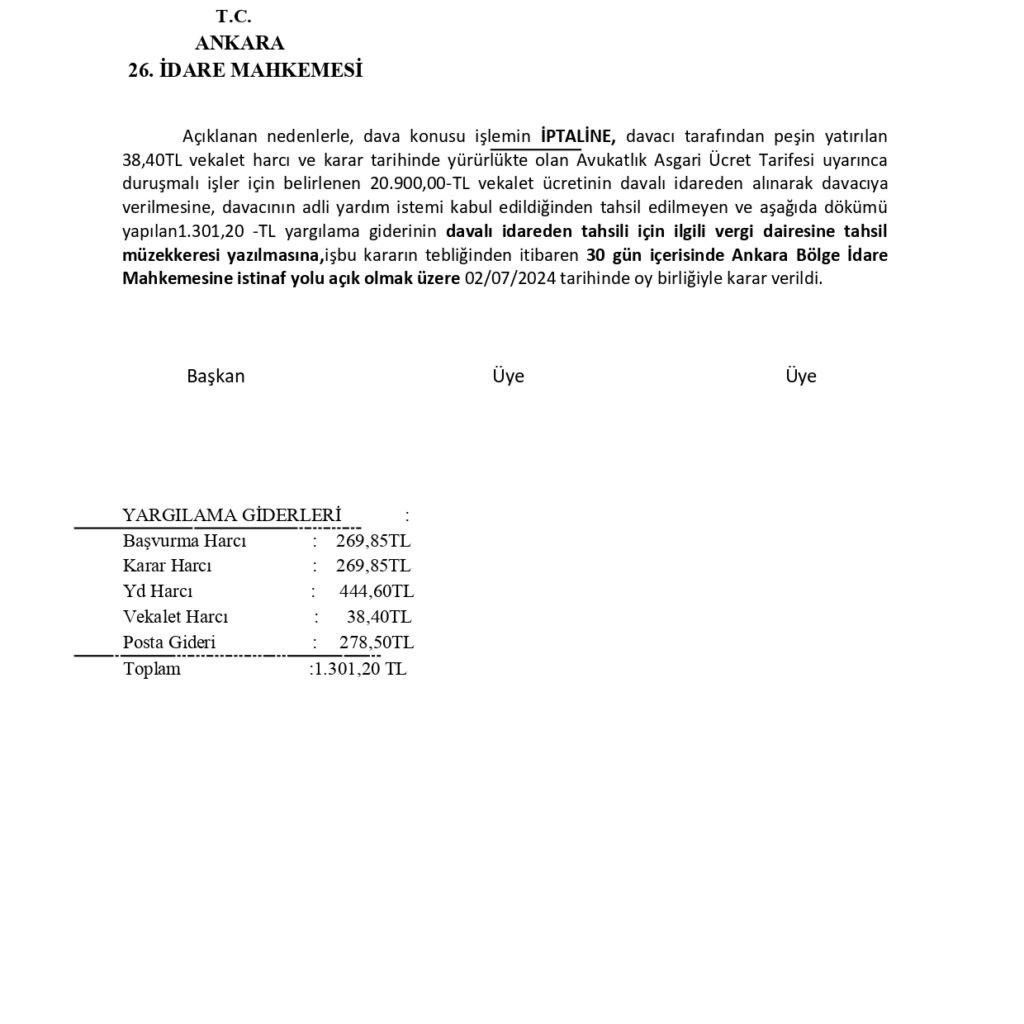
In the remainder of our article, a copy of the decision rendered by the Ankara 26th Administrative Court regarding the removal of the entry ban in the lawsuit we filed on behalf of our client, who was subjected to the Ç-149 restriction code (entry ban), is presented..
For more information https://batinyilmaz.av.tr/iletisim/ you can reach us via our address and our phone number 0532 669 34 90.
Atty. Batın YILMAZ
This article is for general informational purposes and does not constitute legal advice. Legislation and practice may have changed after the publication date; you may consult us for an evaluation specific to your file.

Author
Atty. Batın Yılmaz
Founding attorney of Batın Yılmaz Law Firm. He provides litigation and legal consultancy services in criminal law, corporate law, administrative law, real estate law, enforcement and bankruptcy law, and compensation law, as well as immigration and citizenship law.
About our firm